
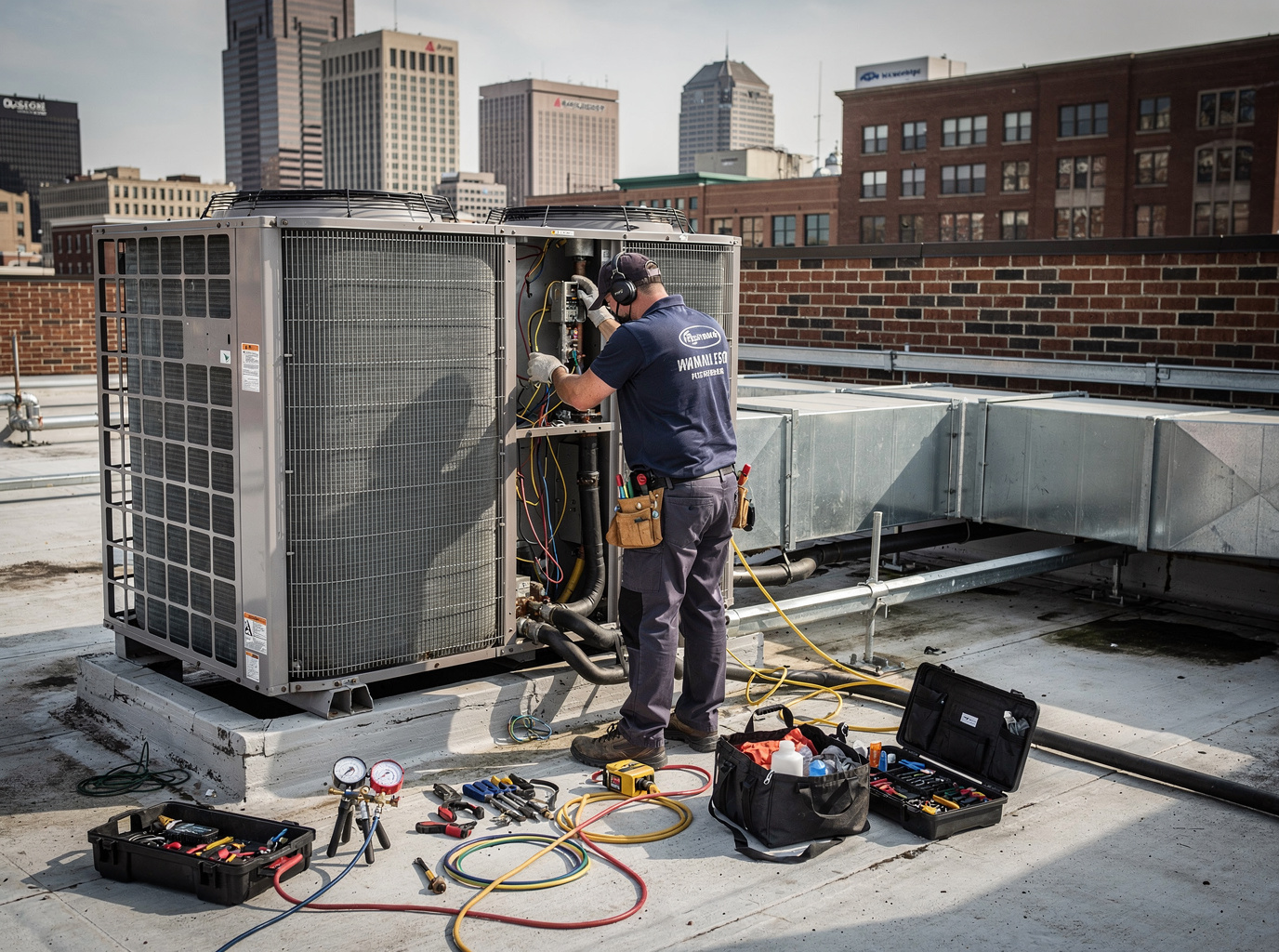
Columbus commercial buildings range from mid-century offices near Columbus City Hall to newer retail spaces in East Columbus. Hot humid summers push rooftop and split systems hard while cold winters require units that handle both cooling loads and occasional heating. Replacement often involves matching tonnage to the building’s actual square footage and insulation rather than the original oversized equipment. Older downtown structures frequently have limited roof access and outdated electrical panels that must be upgraded before a new unit can be set.
We pull permits through the city and coordinate with Bartholomew County inspectors on curb, electrical and refrigerant line changes. In Taylorsville and along the edges of Mill Race Park, ground conditions and tree cover can affect condenser placement and drainage. Proper sizing prevents short-cycling that spikes energy bills during the long cooling season. We also verify that new equipment meets current efficiency standards required for commercial spaces in the area.
Edge cases include buildings near Irwin Conference Center that share walls or have strict HOA-style appearance rules. In these situations we select low-profile units and route lines through existing chases to avoid visible changes. Soil around older East Columbus sites can shift slightly, so we add extra vibration isolation pads. Every job includes a final load calculation and airflow test so the system actually delivers the promised capacity once summer heat arrives.
Technician insight
In Columbus the thing that catches most people out with Commercial AC Replacement is underestimating how much the older electrical service in Downtown and East Columbus buildings limits new equipment size. Hot humid summers here also mean we spend extra time verifying condensate drainage so units don’t shut down during peak July loads.
Retail Space Near Mill Race Park
A retail tenant in an East Columbus strip center lost cooling during a July heat wave. The existing 7.5-ton rooftop unit had failed compressors and undersized ductwork from the 1990s build. We replaced it with a properly sized high-efficiency unit, added vibration isolation, and reworked two branch ducts. The store reopened with even temperatures and lower energy use the following week.
Commercial AC Replacement Services We Offer
✓Rooftop Unit Replacement
Remove and install new packaged rooftop units on flat-roof commercial buildings in Downtown Columbus and East Columbus while maintaining existing curb and duct connections.
✓Split System Commercial Replacement
Replace outdoor condensers and indoor air handlers in retail and office spaces where roof access is limited or aesthetics matter near landmarks like the Irwin Conference Center.
✓VAV Box and Ductwork Integration
Update variable air volume boxes and reconnect duct runs during AC replacement to restore proper zoning in multi-tenant Bartholomew County buildings.
✓High-Efficiency Unit Upgrade
Swap older commercial equipment for higher SEER models that reduce operating costs during Columbus’s extended summer cooling season.
✓Emergency Commercial Changeout
Fast-track removal and installation when an existing system fails during peak summer heat in Taylorsville or Shelbyville-area commercial sites.
Commercial AC Replacement Cost in Columbus, IN
| Service | Typical Range | What Affects It |
|---|---|---|
| Rooftop Unit Replacement (5–10 ton) | $6,800–$12,500 | Price varies with efficiency rating and roof curb modifications |
| Split System Commercial Replacement | $5,200–$9,800 | Depends on line set length and indoor unit location |
| Electrical Panel Upgrade | $1,400–$3,100 | Required when existing service cannot support new tonnage |
| Ductwork Modifications | $900–$2,400 | Common in older Downtown Columbus buildings |
Ranges are typical for Columbus, IN and confirmed with an exact written quote before any work starts.
How it works
- 1
Site Assessment
Measure the building, review existing electrical and duct conditions, and calculate cooling load based on Columbus climate data.
- 2
Equipment Selection
Recommend units sized for the actual load and local summer humidity while confirming roof or ground placement options.
- 3
Removal And Prep
Safely recover refrigerant, disconnect power, and prepare the curb or pad for the new unit.
- 4
Installation And Testing
Set the new equipment, reconnect lines, restore power, and perform airflow and temperature split verification.
- 5
Final Walkthrough
Review operation with the building manager and provide maintenance guidance for the coming seasons.
Pricing
Upfront quotes based on unit tonnage, building access, and any electrical or ductwork changes required.